Victoria’s Secret to make major changes
April 23, 2016 by admin
Filed under Choosing Lingerie
Comments Off
For those whose mail boxes are routinely inundated with Victoria’s Secret catalogs, change is afoot. The company recently announced that it would no longer be issuing catalogs starting at the end of the year. The brand is also eliminating its swimwear line, choosing instead to focus on athletic wear, lingerie and its popular beauty products. Swimwear will still be available in the company’s Pink brand, so fans of the line can visit separate Pink stores for their summer suits. Details of the motive behind the phase out are limited, but a recent article on Buzzfeed titled “Victoria’s Secret is Getting Out of the Swimwear Business” mentioned some possibilities. “…in August the company reported lower sales for swimwear, saying it missed on fashion and designed overly complex swimsuits.”
While Victoria’s Secret has dominated the lingerie industry for well over a decade, in recent years, consumers have seen more high quality options emerge that offer similar quality for lower prices. The web-based retailer Adore Me, which popped up in recent years, has been growing in popularity, primarily because its lingerie is cheaper than Victoria’s Secret, and the brand offers more sizes and styles for curvier women. A monthly subscription service, along the lines of Fabletics or Shoe Dazzle, Adore Me offers bra and panty sets for around $40. The swimwear game has also become more competitive with sites such as Beverly Swimwear, Bikini Luxe and Everything But Water offering high quality suits in a variety of options. Many of these retailers also offer a better variety of plus size suits that are more flattering on voluptuous women.
Victoria’s Secret is still at the top of the lingerie game, but its new brand strategy reflects the changing face of shopping.
Share and Enjoy
Prince’s “Tough” Interview and the Power of Mystique
April 23, 2016 by admin
Filed under Choosing Lingerie
Comments Off
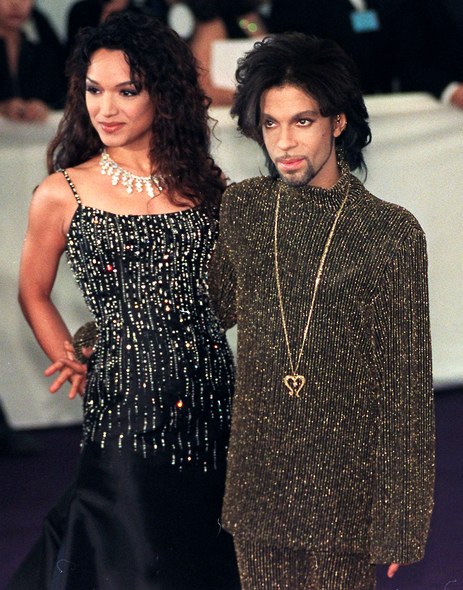
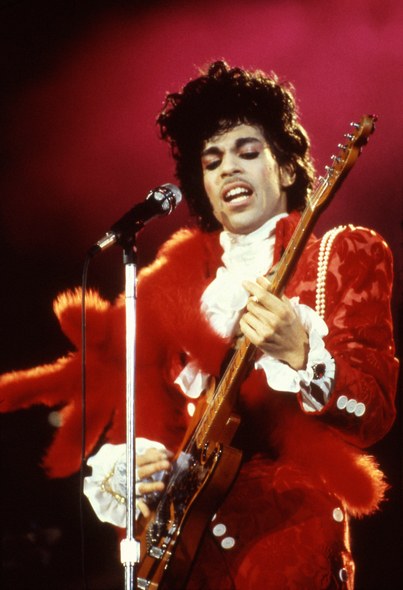
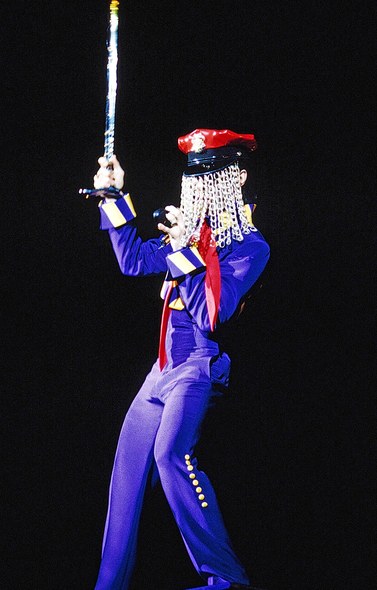
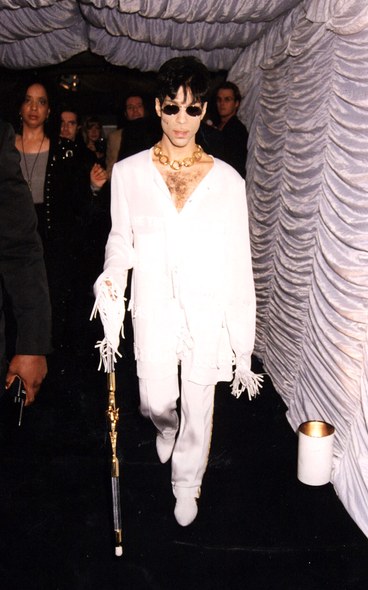
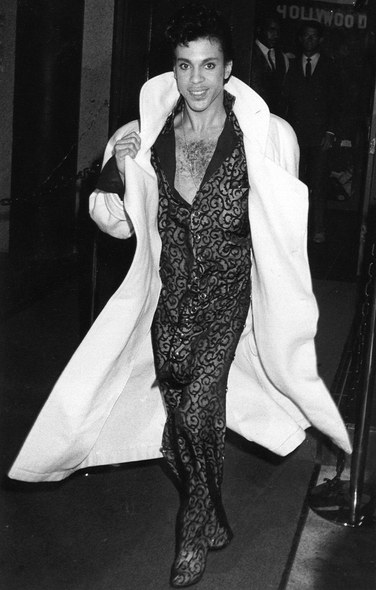
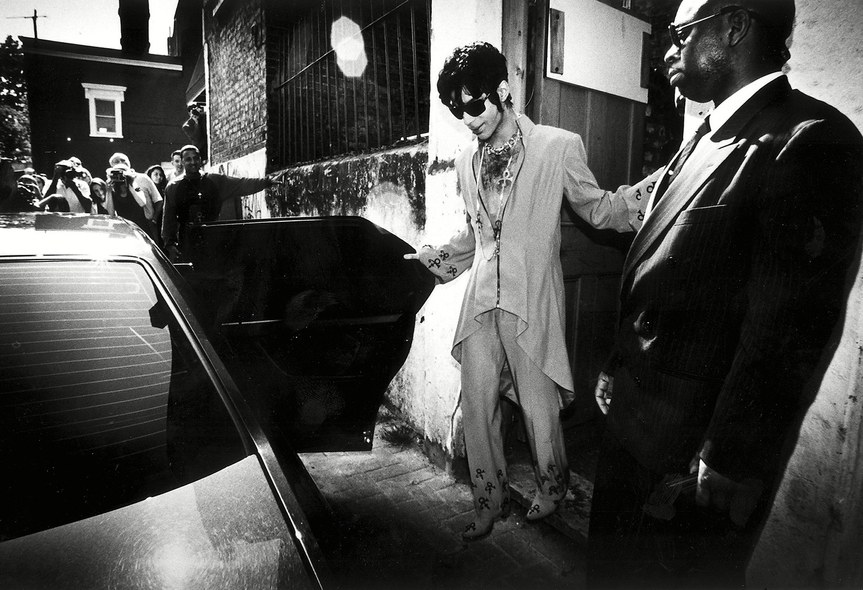
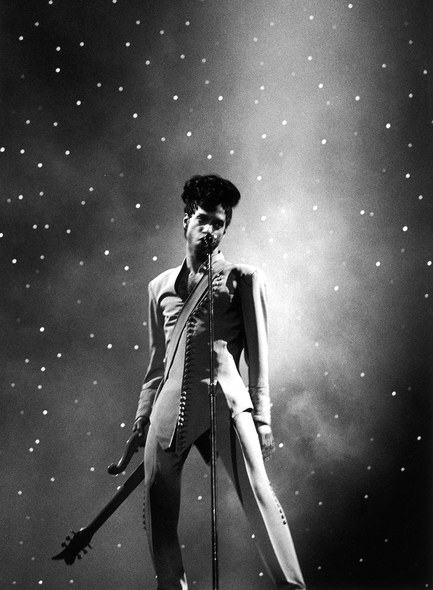
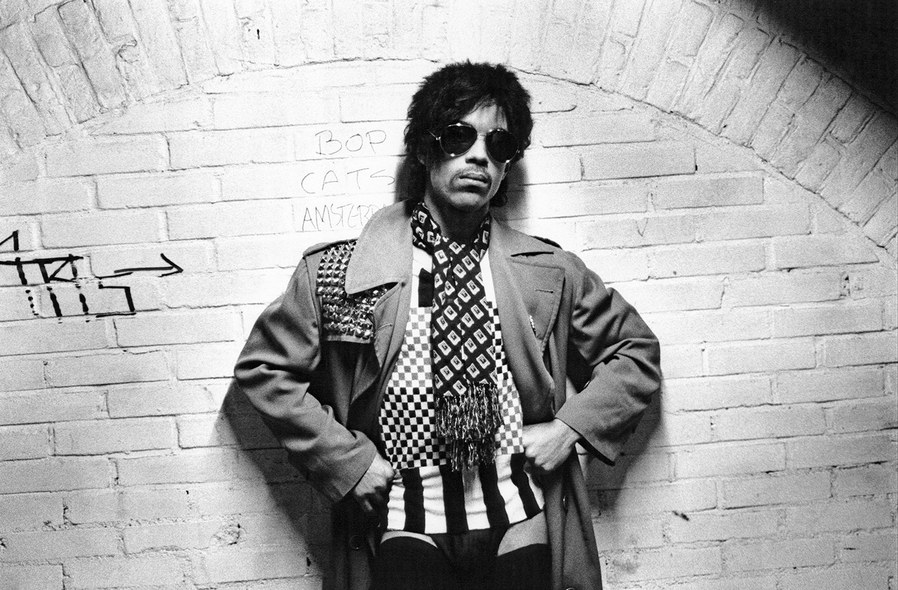
“Y’all just tiptoe around the man!” Chris Rock was saying to me, playfully but pointedly. “I’m the only one who had the balls to ask Prince the tough questions!” This was 18 years ago, so let me back up. Mystique is not a thing that can be worked at; it either comes naturally or it doesn’t. And like David Bowie, who predeceased him by three months, Prince was so utterly, effortlessly enshrouded in mystique that he seemed other-than-human, to the point where mortality never figured into our calculations. That’s why both men’s deaths—unexpected despite reports of serious health problems for both—are so surreal, so devastating beyond the other boomer-generation-musician passings that we’ve experienced of late (e.g., Paul Kantner of Jefferson Airplane and John Bradbury of the Specials), even though, from a grim actuarial standpoint, they make a kind of sense. But unlike Bowie, who, despite the media blackout of his final decade, settled into something resembling a normal New Yorker’s family life, Prince never went so far as to embrace regular-guy-ness. To the end, he kept on living a life of unknowability in his Paisley Park compound, choosing to communicate primarily through his generous live performances, which, right into this year, often started after one A.M. and continued ’til dawn. Still, Rock, when I interviewed him for a 1998 Vanity Fair cover story, couldn’t help but direct some good-natured taunting my way vis-à-vis the media’s timorous approach to Prince. We were in Rock’s trailer on the set of the movie Lethal Weapon 4, conversing over a clunkily D.J.’d mini-marathon of the great man’s music. In those pre-MP3 days, Rock had to manually flip from one disc to the next, quickly ejecting Purple Rain from his CD changer in favor of The Black Album, so he could move from “Darling Nikki” to “Le Grind.” “Why,” Rock said, “am I the only person to have done an interesting interview with Prince? C’mon, you can do better!” Well, to be fair, I had never interviewed Prince myself, and Prince was more likely to be responsive to a fellow artist of Rock’s caliber than some anonymous dude or dudette with a recorder and a notebook. (As a matter of fact, when he did grant media interviews, Prince often insisted that no notes be taken, and no voice recordings made, which led to some wonderfully eccentric and impressionistic profiles of him; check out the archive of the British magazine Q for some examples of this.) But back to what Rock was saying. He had recently conducted an on-air interview with Prince—then in his “Artist Formerly Known As” phase—for VH1, and he was pleased with the candid answers he had elicited from the musician. Justifiably so. Though Prince was protectively bundled in goggle shades, a lime-green cowl-neck sweater, and a cream-colored trench, he was game to go along with Rock’s line of questioning. It may be the most revelatory interview Prince ever gave. Rock was proudest, he told me, of daring to ask Prince about the queer-friendly image that the artist cultivated in his early years, especially on the flesh-baring covers of his second and third albums, Prince and Dirty Mind. “The androgynous thing,” Rock said to Prince. “Was that an act, or were you searching for your sexual identity?’ Prince was also uncharacteristically forthcoming about the origins of his attitudes toward women, which were at once hypersexualized and un-rockishly respectful; for all his lingerie-clad onstage foils, from Denise “Vanity” Matthews to Apollonia Kotero to Mayte Garcia, he reveled in working with gifted female musicians, from Wendy Melvoin and Lisa Coleman in the Purple Rain days to the percussionist Sheila E to his most recent combo, 3rd Eye Girl. “Once my mother remarried,” he explained to Rock, “it was during the time period in my life where she had to teach me about the birds and the bees. And I’ve never asked her about this, but I think there was some sort of plan to initiate me heavy and quick. I was given Playboy magazine, and there was erotic literature laying around. It was very easily picked up. It was pretty heavy at the time. I think it really affected my sexualty a great deal.” When Rock pressed Prince about potential rivalries with other musicians, Michael Jackson chief among them, the latter sidestepped the issue, saying that the rivalry mindset was alien to him. Still, he did note that Jackson had asked him to play M.J.’s chief adversary in Martin Scorsese’s video for the song “Bad”—an invitation that Prince turned down. “That Wesley Snipes character? That would’ve been me,” Prince said. “You run that video in your mind. The first line in that song is ‘Your butt is mine.’ Now, I was saying, ‘Who’s gonna sing that to whom? ’Cause you sure ain’t singin’ that to me! And I sure ain’t singin’ that to you. Right there, we got a problem.’” For all the candor and looseness on display, though, Prince was savvy enough to keep plenty of himself to himself—to hold that mystique intact. What we got, via Rock, was just a glimpse of the corporeal, linear-thinking, flesh-and-blood Prince Rogers Nelson who was born to a pair of human beings in Minneapolis in June 1958. And a glimpse is all we’d really want, isn’t it? In the years to come, we will inevitably learn more of the actual man’s actual life, as biographies and reminiscences come out. (As a matter of fact, Prince had just announced, a month ago, that he would be producing an “unconventional and poetic” memoir for the Spiegel Grau imprint of Random House.) But let’s face it, we all preferred the mystique: the wonderment of observing, at an awed distance, this petite genius-changeling-virtuoso-phreak who remained seemingly impervious to age or fatigue. My favorite Prince-mystique moment came in the mid-80s, when, perhaps exhausted by Purple Rain-era overkill, he took a break from granting any interviews whatsoever. Instead, he chose to speak to the public through a one-sentence prepared statement: “I’m looking 4 the ladder.” It was tantalizing, inscrutable, and kind of hilarious. Was he retreating to an ashram, or, perhaps, clearing out the jumble in his garage? The answer came in a song on his follow-up to Purple Rain, the psychedelic Around the World in a Day, on a gorgeous, strings-and-sax-laden gospel song called “The Ladder”: a co-write with his jazz-musician father, John L. Nelson. And, yes, it was about transcendence and salvation. Everybody’s looking 4 the ladder Go 4th and climb, Prince.
“That’s a good question,” Prince said, his speaking voice an octave lower than you expected it to be, his mouth curling into a wry smile—you could sense him, for once, thinking on his feet, formulating his words carefully. “I don’t suppose I was searching, really,” he replied. “I think I was just . . . being who I was. Being the true Gemini that I am. And there’s um, there’s many sides in that as well.” Finally, with a laugh: “And there was a little acting going on, too.”
Everybody wants salvation of the soul
The steps U take are no easy road
But the reward is great
4 those who want 2 go