ThirdLove Raises $8M To Take On The Lingerie World With A Phone-Based Fitting App
February 3, 2016 by admin
Filed under Latest Lingerie News
Comments Off
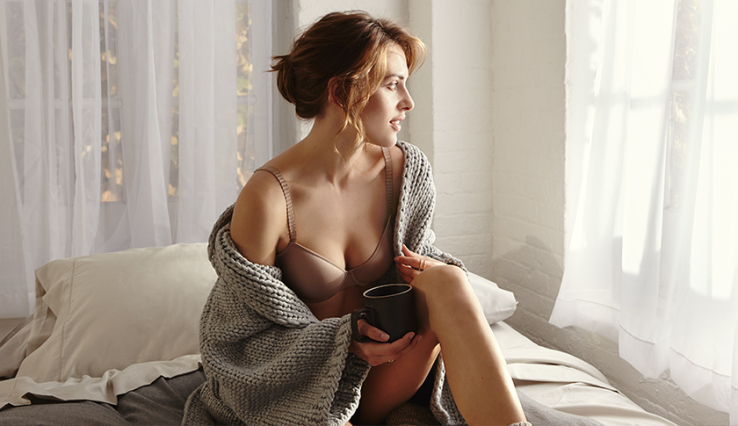
Of the many categories of products that are hard to buy online, one of the most challenging is underwear — and specifically bras. Even at the best of times — when you are physically in a store with a veritable sea of bras at your disposal to try on — the process can be painfully unrewarding, with two bras purportedly made for the same proportions fitting completely differently, and neither very comfortable.
A startup called ThirdLove has been working for years to improve this. Using advanced image recognition technology; a smartphone app; a growing network of bra manufacturers; and experience that the wife-and-husband cofounders Heidi Zak (CEO) and David Spector have gained through previous roles at places like Google and Sequoia, ThirdLove wants to reset the whole process of how to find and buy brassieres. Today, the company got a step up in their its trajectory, with an $8 million Series A round of financing.
The funding is coming from a long list of big names in the VC and fashion retail industries. Led by NEA, the Series A also had participation from Tomorrow Ventures; Felicis Ventures; Laurie Ann Goldman, former CEO of Spanx; Lori Greeley, former CEO of Victoria’s Secret Stores; John Hamlin, Chairman of REI; Barry Sternlicht, founder of Starwood Hotels; Claire Bennett, EVP at American Express and a member of the Board of Directors of Tumi, among others.
It comes on the heels of a $5.6 million Seed round raised in 2013.
On the surface, you might think ThirdLove is your average e-commerce site and app — and there are certainly a lot that are focusing on the lingerie industry.
But not unlike fashion itself, the real story lies beneath the garment. In this case, behind ThirdLove’s storefront is a company working on bringing together cutting edge imaging technologies, big data analytics and logistics and supply management — a classic case of ambitious tech people trying to pool everything they know and know about to solve a hard problem.
ThirdLove rethinks bra making and selling on a few different levels.
The first involves the method it uses to help identify the right size for a customer — through a series of selfies that you take using its app, the app then processes and reassigns these two-dimensional images into three-dimensional shapes and matches them up to its database of own-brand bras.
Importantly, ThirdLove does this measuring on your phone. That is, no selfies are ever uploaded to ThirdLove’s databases or to any other cloud repositories.
But what ThirdLove does do is use the resulting data of sizes to figure out what is really going on in the wider world of consumers who are buying bras. That analysis, in turn, is used by the company to work with bra makers to come up with better models of bras, even going so far as to make more or less of certain sizes based on what its customers are ordering.
This makes the buying process for ThirdLove more efficient. “In the apparel business, you always have to order in advance of demand,” Zak said. “With the data we collect, we’re able to see what sizes and styles are selling better and use that to order better.”
The other place where this makes a difference is in the style of the bras itself. ThirdLove has used its own data to essentially pioneer a whole new range of bra sizes based on half-cup measurements, providing a better set of products to match a wider range of body shapes. “We are the only company that has this data set,” Zak says of the proprietary data.
Essentially, what ThirdLove has done is increase the range of sizes up by 30%, which is a big deal in an industry that’s been stuck essentially between cups A-H (with a big emphasis on A-D in most stores) for a long time.
So far, the proof has been in the pudding, so to speak. ThirdLove says that revenues have grown 400% between 2014 and 2015, with returns of product averaging at only 2%, far below wider industry figures for online returns, which can get up to as high as 30% in some apparel categories.
The company is not revealing any specifics about valuation and revenue but confirms that up to now it’s had “a lot of inbound” — that is to say, acquisition offers — and also requests to provide back-end technology to other retailer players in the lingerie space. So far, it’s rebuffed companies on both fronts.
“We are not interested in selling,” Zak says, ” and we’re not interested in the B2B model right now. What we do is what makes our product so special.”
The longer-term goal will be to use the same tech to expand into other product categories, most likely first something like swimwear since it is an adjacent business to lingerie in terms of fitting challenges, the complexity of designers and manufacturers putting the actual garments together, and of course fashion tastes.
But for right now, ThirdLove is sticking to knickers. “The intimiate apparel is a $15 billion market in the U.S.,” Spector noted, “And China is $18-20 billion and growing 30% year-on-year. We have a lot to do before expanding to new categories.”
Indeed, the fact that some of the investors in this current round come from the lingerie industry is a testament to ThirdLove doing something right.
Share and Enjoy

Barbie will now come in curvy, tall and petite bodies, also seven skin tones
February 3, 2016 by admin
Filed under Choosing Lingerie
Comments Off
NEW YORK — At 57, Barbie is getting a major makeover.
The iconic plastic doll, whose small waist and long legs have been criticized for creating unrealistic expectations for girls, will soon be sold with three new bodies — curvy, tall and petite. Barbie will also be more diverse, coming in seven skin tones, 22 eye colors and 24 hairstyles.
Mattel has been searching for ways to recharges sales of Barbie, which fell 4 percent in the most recent quarter as “want lists” from girls increasingly include iPads, smartphones and electronic toys. The company hopes more kids will be able to relate to the new dolls.
The body transformations have been in the works for two years, Mattel spokeswoman Michelle Chidoni said on Thursday.
The doll has changed in some ways already. New skin tones and looks were added last year. And Barbie’s foot was movable for the first time, allowing her to kick off her heels and wear flats.
The El Segundo toy company said it will still sell the original 11.5-inch Barbie. The new versions will begin arriving on U.S. store shelves in March and will roll out globally after that. They are available for preorder at shop.mattel.com, and will ship in February.
Whether the new models will be a hit with children remains to be seen, though Chidoni said previous changes were “positively received.”
Virgie Tovar, a San Francisco body image expert, said it represents the extent to which body positive and fat politics have made “incredible headway culturally.”
“Barbie has long been a symbol of ideal femininity in the US — blonde, busty, cheery, and impossibly narrow waisted,” she says. “Barbie represents a litmus test when it comes to the state of gender norms, and I’m excited to see this change.
Chrystal Bourgon, owner of San Jose’s San Jose’s plus-sized lingerie shop Curvy Girl, was a bit more guarded in her praise. “I still do not see my body though,” she says. “Not all curvy bodies are hour-glass-shaped. But Mattel set a very low bar with the original Barbie: a body with proportions that could really only be obtained through surgery and augmentation.”
Still, she notes, it’s start.
Marketing experts said more will have to be done to return Barbie to her former glory.
“The look of the dolls is great,” said Marc Rosenberg, a marketing consultant in Chicago who has worked in the toy industry for 25 years. But in order to connect with kids, the new dolls need to show up in Barbie YouTube videos, apps, shows and other content, he said.
Worldwide sales for Barbie have fallen every year since 2012. Mattel will release 2015 sales figures next week.
The company sells other dolls, including Monster High and American Girl brands. But Barbie remains very important, bringing in about 27 percent of Mattel’s total revenue in the most recent quarter.
It is hoped that the new models will reinvigorate sales by bringing back into the fold the parents who had grown tired of the familiar blonde doll.
“One size doesn’t fit all,” said Jim Silver, editor-in-chief of TTPM, a toy review site in New York. “This gives people different options when choosing a Barbie for their child.”
However, labeling the dolls as curvy, tall and petite bothered some on social media. And Rosenberg said he was surprised by the labels.
“Why does Mattel need to use physical attributes to describe the doll?” asked Rosenberg, who said packaging should instead focus on the doll’s career or education.
“I think the use of the word ‘curvy’ is misguided,” he said. “I don’t think it’s necessary to use the word.”
While Barbie may look different, she’s still not shying away from the spotlight.
The doll is on the cover of Time magazine, which first reported the changes to the doll. Barbie’s new curves are shown in shadow on the cover, next to the headline, “Now can we stop talking about my body?”
It’s a stark contrast to when Barbie showed up in the pages of the Sports Illustrated Swimsuit Issue nearly two years ago. Back then, the doll wore a black and white swimsuit, black heals and had white sunglasses tucked into her blonde hair.
Staff writer Martha Ross contributed to this story.