When Lingerie Crosses Gender Lines
November 21, 2014 by admin
Filed under Latest Lingerie News
Comments Off
Pictured: Underwear designs from Menagerié’s Resort 2015 collection.
The difference in what is considered sexy nightwear between men and women couldn’t be more pronounced. Yes, men will occasionally find designer silk boxers or a nice robe, but rarely does it approach the sensual and intricate design of what is typically women’s lingerie. Seeking to expand the fun of garter belts and bras to a male audience, some underwear brands are stepping up to expand your options for the bedroom.
“There’s no variety in the men’s lingerie sold in department stores. It’s boxers and briefs, and if you’re really daring, maybe a thong,” says designer Brent Krause. “There’s no denying department stores sell good quality, functional underwear, and that’s fine for 90% of men. But not me.”
Running his own lingerie company, Homme Mystere, Krause designs forms and fabrics that will allow men to feel just as sexy as women. With bralettes, lacy panties, frills, and teddies, Krause wants to give his customers the same thrilling opportunities women have had for years. “Choosing a style of Homme Mystere each morning is a little more fun,” he adds. Though it isn’t new that men put on women’s lingerie for kicks, Krause wants to steer clear from cross-dressing or fetishist references: His designs are inspired by women’s lingerie, but wholly designed for a male frame.
The trend seems to follow a push from high-fashion designers to bring lace to the runway. In her fall/winter 2013 collection, Donatella Versace showed lace boxer shorts and slips on hunky models. Back in 2012, the Brazilian model Marlon Teixeira posed next to supermodel Stephanie Seymour in Kiki de Montparnasse lace panties, and still looked hot as hell. Now, new lingerie brands like Menagerié aim to popularize delicates for men, with soigné campaigns featuring sexy models wearing lace head-to-toe, an combining masculine styling with fabrics traditionally meant for women’s underwear.
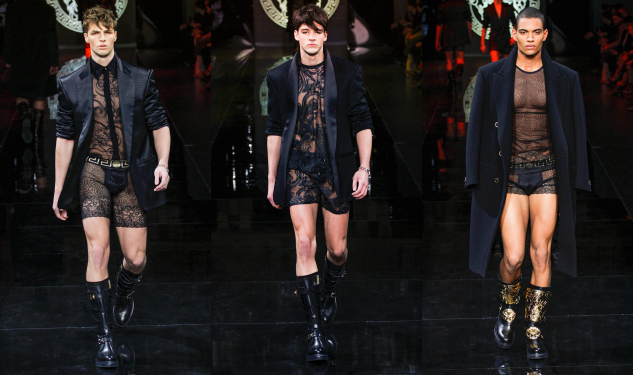
Versace Fall/Winter 2013-14 (via Style.com)
But what about those in between? For many transgender people, underwear meant for rugged bodies and a flat chest may not be appealing, nor even fit. And most women’s lingerie brands don’t take into account the needs of a trans body. In response, the trans-focused brand Chrysalis was created to address those concerns. With sexy, feminine lingerie meant specifically for trans women, Chrysalis provides options for an underserved community. Its underwear easily accommodates bra inserts and makes tucking easier.
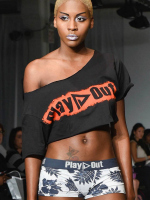 While most of women’s lingerie is being sold today with the pressure to look sexy, some women also want the comfort of simple boxer shorts without the bulk of extra fabric found in men’s underwear. For them, there’s TomboyX and PlayOut (pictured, right). TomboyX emphasizes a no-frills, minimalist style, allowing for women to wear boxers without having to compromise for boy shorts or men’s underwear. Meanwhile, Play Out makes underwear in a gender-neutral cut, with a wide range of patterns and designs.
The underwear revolution fits into the current trend of clothing blending gender lines, with one difference: Now, everyone can feel comfortable and sexy, and nobody else has to know what they choose to wear underneath.
Share and Enjoy

Sukki Singapora ~ Desi Burlesque Performer
November 21, 2014 by admin
Filed under Choosing Lingerie
Comments Off
“I do incorporate elements of striptease, but it doesn’t define my performances.”
Articulate, charming and extremely unique, Sukki Singapora is the world’s first ever Desi Burlesque dancer.
Half-white British and half-Indian Singaporean, Sukki has reached the very top of her field in the world of performing arts.
With electric blue hair, and exquisitely designed lingerie outfits, Sukki very much represents a minority within British Asian community.
Admitting that it was an unusual career choice to take, in an exclusive Gupshup with DESIblitz, Sukki tells us the decision grew out of a love for vintage fashion and dressing up:
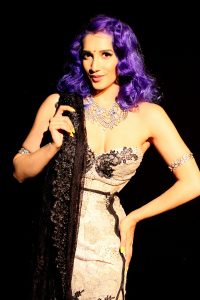 “Growing up as a mixed race child I always felt a little out of place in the two cultures. So I discovered vintage fashion as a way of expressing myself.
“And when you get into vintage fashion, you hear about the vintage advocates, the American stars and a lot of them practice burlesque, it tends to go hand in hand.”
“I was immediately drawn to it and hooked, and now as they say, the rest is history,” Sukki says.
Burlesque emerged from Italian theatre in the 17th century and then again in Victorian theatre. It essentially means to ‘poke fun of’ and was used as a form of comedy on stage. It was later adopted by American stars in the 1990s. As Sukki explains:
“It would be a light-hearted, artistic, dance performance with elements of striptease incorporated.”
Sukki says it is this neo-burlesque which has gone onto infiltrate both Asian culture and Western culture.
Stockings and corsetry are the main elements of the burlesque uniform. Tight lacing is also encouraged and refers to the cinching of the waist with a steel boned corset for ‘extreme waist reduction’.
As Sukki explains, this creates the popular ‘hourglass, Jessica rabbit silhouette’. Sukki admits however that her interpretation of burlesque in her performances is less erotic, calling it ‘unoffensive’:
“What I do is slightly different though. I do incorporate elements of striptease, but it doesn’t define my performances.”
For many, burlesque is seen as a controversial art form, one that encourages sexual enjoyment and eroticism, definite taboos in many Asian societies, but as Sukki explains these are simply misconceptions of what is a very refined and complex performing art.
As Sukki explains: “The difference between the adult industry and burlesque is a hotly contested debate, but I think that really stems from the lack of knowledge around what burlesque really is. Yes there are elements of striptease.
“However the elements of striptease are not to placate any male sexual agenda. It merely is to embody what it means to be feminine and the body of the female form.”
Interestingly, Sukki also adds that the majority of her performances see a high percentage of female attendees, as opposed to males:
“Over 80 per cent in most circumstance of my audience are female. And they attend the events and they like to dress up and like to do their hair and it’s all about the aesthetics of it and feeling confident and sexy as a woman.”
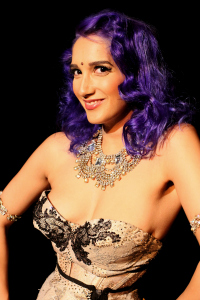 Sukki sees her profession as a celebration of the female form. Enjoying the beauty and allure of women in a way that encourages confidence rather than submissive behaviour, which is common in Asian society.
Sukki admits however that her career path has derived backlash from the community, although her family remain supportive of her decision:
“When my parents found out that I was to become a professional burlesque performer, there wasn’t a congratulations party. Of course, it has caused some controversy, but I think once you explain what burlesque is, the taboo around it very quickly dissipates.”
But being the world’s first desi burlesque performer is not without its perks. Having become widely established internationally, Sukki recalls that she was even smuggled into Lebanon and Beirut to perform at a private party.
She has also been congratulated by Queen Elizabeth after being invited for tea at Buckingham Palace. Sukki says these are great honours and cement her passion for burlesque.
Sukki is now an inspiring role model for young women and girls like her everywhere, supporting various charities and NGOs for female empowerment:
“I am choosing my career path. Now that doesn’t mean to say that I could not have chosen something else, but what I advocate is the fact that I did have that choice, and I chose to do a very complex and difficult art form of which I take pride in.
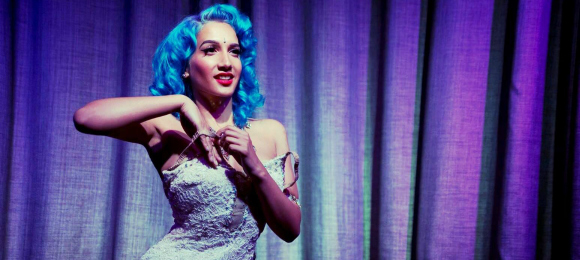 “It is difficult as an Asian woman to choose the arts, to flourish in the arts and to express yourself to the extent you want to express yourself. So I hope that by working really hard at it, I can become an inspiration, and inspire a generation of young Asian women, and young women across the world to just be free to express themselves.”
Sukki defines what it means to live against cultural norms. But at the same time she is proud of both her choices and her heritage. Even her outfits are custom made to indulge her cultural background:
“Every single outfit I wear, there is an element of a sari woven into it. I try to wear my heritage in my performances, literally wear my heart on my sleeve. So I guess I’m unique in that respect perhaps.”
Quirky and gifted, Sukki Singapora represents a new breed of British Asian in society, one that we are keen to see much more of.


Aisha Farooq
Follow @desiblitz
Follow @desiblitz
Must Reads

Jaz Dhami’s Pasina features Sneakbo and Ikka
The UK’s Biggest Bhangra Competitions
Is the Era of Bhangra Bands over?
Singer San2 Jailed for Sexual Assault