Discovering The Pink Petticoat, Tampa’s Lingerie Treasure Trove
July 2, 2014 by admin
Filed under Latest Lingerie News
Comments Off
Girls just want to have fun! Right? Well The Pink Petticoat is just the place to have some fun; it drips feminism. Walking into the store feels as if you have entered Marie Antoinette’s bedroom–powder pink walls fitted with dusted gray trim frame the grand floral chandeliers bursting from the ceiling and converted pieces of vintage furniture. As one customer so eloquently stated, walking into the Pink Petticoat “looks like [her] dream closet.”

Founder Lesley Geyer claims her destiny was to be in lingerie, as it is her life-long passion. As a child, she even preferred to tote one of her mother’s silk slips around over the standard blanket! After a brief stint in the corporate world, Lesley left that world behind to pursue her dream. So, her life-long love affair with lingerie became her next adventure. Opening The Pink Petticoat was indeed Lesley’s destiny.

Hyde Park Village in Tampa, FL, an upscale open-air shopping center, houses The Pink Petticoat. As a Tampa native, Lesley actually spent her early years within walking distance of Hyde Park. Hyde Park, though upscale, still tailors to the local community, as many of the retail spaces are filled with boutiques that are completely owned and operated by locals. It is filled with restaurants, boutiques, wine stores, a gym and even a retail shop for your dog!
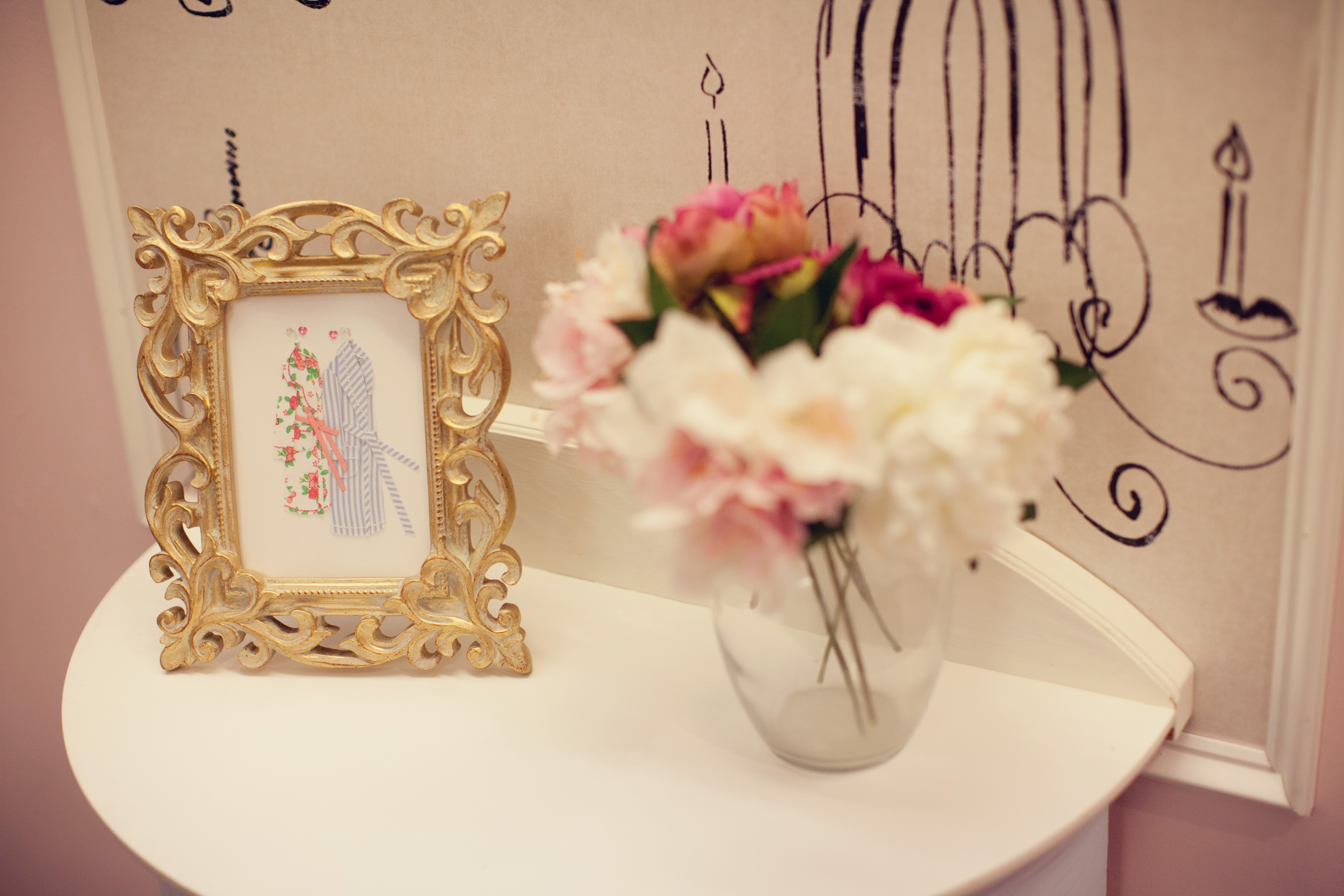
The entire Pink Petticoat experience is magical; Lesley likes to make sure every customer walks out the door feeling beautiful, sexy, confident and comfortable. The Pink Petticoat was recently named “Best Customer service in South Tampa.” If you enjoy your shopping experience, you can make The Pink Petticoat the site of your next party! The Pink Petticoat hosts private lingerie showers and parties with refreshments, champagne and discounts.

Besides her customers and lingerie, Lesley has a passion for charity. The Pink Petticoat donates to over 150 charitable organizations each year. Lesley’s philosophy is to “give a donation to any organization that asks.” Her charitable donations are making the local community take even more notice of this little boutique. It’s definitely easy to have fun being a girl at The Pink Petticoat.
“Don’t forget to fall in love with yourself first” (-Carrie Bradshaw) do it at The Pink Petticoat.
By: Stacy Radley
Share and Enjoy

Museum takes on lingerie
July 2, 2014 by admin
Filed under Latest Lingerie News
Comments Off
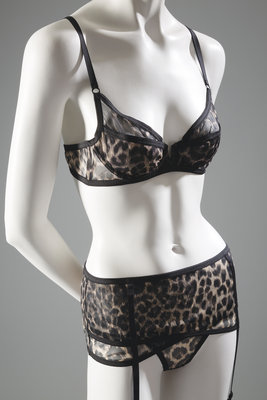
NEW YORK — From a 1770 corset to a 2014 bra-and-panty set in lacy stretch silk, the Museum at the Fashion Institute of Technology has put the focus on lingerie and ladies foundation garments in a new exhibition.
In about 70 pieces, “Exposed: A History of Lingerie” touches on the mechanics, marketing and cultural touchstones — hello Wonderbra! — that not only shape and adorn but also helped define culture around the globe.
The exhibition, which spans the 1760s to present day, opened June 3 and runs through Nov. 15. A companion book will be released by Yale University Press this summer.
The corset’s rise and fall
The corset’s profile was first upped in the late Renaissance and remained popular in many forms through the early 20th century.
“It was a pretty essential element of fashionable dress for about 400 years,” said assistant curator Colleen Hill, who organized the exhibit.
The corset, which originated within aristocratic court culture and gradually spread throughout society, was all about a slender waist, she said. By the mid-18th century, the desired silhouette was an inverted cone, lifting the breasts with the help of stays crafted out of silk, whalebone or wood.
Decorative center busks were carved, painted and adorned with text or years. They were key in thrusting a woman’s posture upright to make the most of the shape the corset was intended to achieve, Hill said.
By the early 19th century, the corset still included a center busk but lacked all-around stays for a more softly structured fit that still encased the body and kept a woman’s posture erect.
“It was important for women to have this correct posture,” Hill said. “It was essential for fitting into your clothes, for decorum and for modesty.”
At the dawn of the 20th century, some corset makers continued to promote their wares as “healthy style,” but the designs remained “extremely restricting,” she said. Certain designs made a woman appear rigidly straight in front while resulting in a severely arched back.
By 1920, the corset had essentially become a girdle.
The peignoir and loungewear
One late 19th-century article discovered by Hill said American women wore loungewear with a corset underneath while doing morning household chores or preparing for their day.
The corset under a peignoir “is something French women did not do,” she said. “I thought that was very interesting because some of these garments were meant to essentially be a reprieve from these really constricting foundation garments like the corset.”
By the early 20th century, Hill said, loungewear served more functions. The tea gown developed from the peignoir or dressing gown and was worn during 5 o’clock tea.
“It was something that a woman could wear within her home, but you would greet your guests at home for tea in this garment, so you still wanted something really fashionable, as luxurious as you could afford, but it was something that could be worn without a corset. We don’t see tea gowns today.”
Seduction and Eroticism
The British company Agent Provocateur, founded in 1994 by Joseph Corre, the son of Vivienne Westwood, and his now ex-wife, Serena Rees, represents a turning point in lingerie’s modern history, Hill said. They opened their first boutique in 1996.
“They were selling lingerie that was highly eroticized, things that were high end and beautifully made, so they’re classy yet they’re taking a cue from things like the old Frederick’s of Hollywood catalogs that are just really overtly erotic,” she said.
The evocative nature combined with high-end craftsmanship offered by Agent Provocateur led to a greater acceptance of eroticized undergarments and lingerie, Hill said. The company now operates boutiques around the world.
The Wonderbra
Pre-Wonderbra, women looking for some help in the bust department relied on “gay deceivers,” an early 20th-century euphemism for falsies that could be placed inside bras, Hill said.
“Even some corsets from the 19th century have these kind of falsies built into them, so the idea of augmenting your natural breast size in some way is very old and probably impossible to trace all the way back,” she said.
Enter the Wonderbra, with its plunge, padding and pushup via underwire. According to some reports, the name was first trademarked in the U.S. in 1955 but came out of Canada in 1939 as developed by Moses Nadler, founder of a corset company. It wasn’t until the early 1990s that the Wonderbra really took off, Hill said.
Sales were driven by a 1994 ad campaign that featured smiling model Eva Herzigova looking down at her breasts in a Wonderbra with the tagline: “Hello Boys.” The popularity of the ad, including billboards, sent sales skyrocketing. At one point demand exceeded supplies, Hill said.
“There’s an urban legend that when people saw these billboards on the street they would literally cause traffic accidents,” she said.