Spy Eye: An Interview With the Costume Designer for The Americans
February 3, 2015 by admin
Filed under Choosing Lingerie
Comments Off
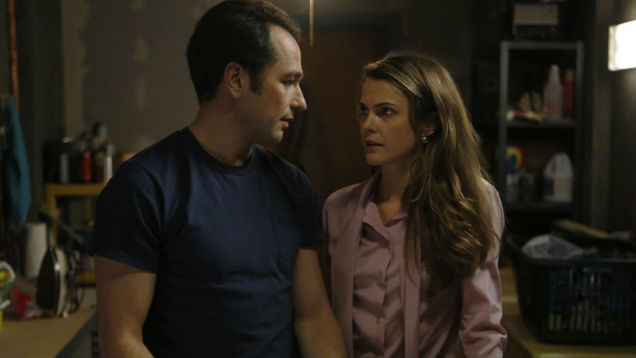
Like most married couples, Elizabeth and Philip Jennings have their share of ups and downs, passion and apathy, parenting mishaps and frequent misunderstandings and breakups. Unlike most married couples however, The Jennings, the TV family at the center of The Americans, are also undercover Cold War-era Soviet spies living in 1980s Washington DC.
In case you’ve never watched the show—or actually lived through the era—it’s easy to cringe and imagine that the clothes the characters are wearing are less about personal style and more about conforming to the decade’s overblown permutations of polyester. But Jenny Gering, The Americans‘ Costume Designer, elevates these looks to become a complex array of fashion and disguises that weave together the larger narrative. Somehow, she makes all the buttoned-up necklines, tube socks and polyester skirts convey tension and suspense. I spoke with Gering about the new season of the show, her thoughts on dressing (and undressing) spies and The Americans‘ new racy and refined collaboration with lingerie brand Cosabella.
Jezebel: Have your relationships with Elizabeth, played by Keri Russell, and the other characters changed as they evolve?
Jenny Gering: The characters on a well written show will change and evolve. Elizabeth is very complex and I like who she starts out as. I like the bones of the character. I like what she has to do, but as the story evolves that affects me less—I’m able to pick and choose what I relate to. Oddly enough, I like her as a mother. Not that I think she’s a good mother, but I like that she wants to be. Her decisions, while sometimes off the rails, come from an honest place and I think that’s what I relate to. That sets the stage for me with how she wants to portray herself as a woman—just Elizabeth, and not the disguises that she has to wear. There’s an earnestness that I can relate to. For me that translates to her sartorial choices. She responds to natural fibers. There’s a realness to it that attracts me.
That’s an interesting thing to say, considering that the rest of her is so fake or contrived.
It is so fake, but I don’t see it that way. It all stems from her having such a strong belief in her beliefs. It comes from an honest place for her.
When you design her costumes, do you try to choose what she’d think about wearing? Or is it more about the persona she’s about to assume?
I have the same process for all the characters. I try to empathize with them. I just sort of design the clothes based on the choices that I’d make. It doesn’t go to that level with Elizabeth. That would be more of a brain teaser than that needs to be. It’s so instinctual to her. She would be wasting a hell of a lot of energy if every detail of every day had to be orchestrated for her.
What about regular women and how much time they spend trying to wear the right clothing or figure out how to dress the right way for the parts they play in their own lives?
I think that you’re overlapping two issues. How much time are people women really spending figuring out their clothing or outfits? I’m not sure. The second part is— it’s not a struggle, or at least it shouldn’t be. It’s not so torturous for me because it’s what I’m good at. There are so many other things that I’m not good at, but this is natural for me.
In terms of women, one common question from women is: “Am I crazy to be spending so much time [choosing an outfit], or is there a way to streamline this process?” Or they seem to be asking “Why do I always feel like I’m failing at this? How can I be better at this?” Most women don’t think they’re good at choosing their own looks. They see it as a constant challenge.
So how can women streamline the daily process of choosing what they wear?
I’m not the kind of person to offer those good sound bytes. You know, ” You must own one black jacket and a crisp white shirt.” No. That’s not it at all. It’s about confidence. It’s about giving yourself room and breath to appreciate who you are. I’m not immune to it. None of us are. We’re all bombarded with copy telling us that we’re wrong basically. But I’d much rather be complimented on my style than what I’m wearing. There’s a big difference between who you are and what you wear. I’m so hyper-aware of this. There’s such a limited amount of women who have access to everything that most women dream about—but somehow even they never look right. They’re just following a formula and it looks really boring.
I’m always attracted to someone whose look is like it came from inside them—an interesting necklace, their grandfather’s ring that they wear on a chain. That becomes the building blocks of their personality. I think women are so scared to just be themselves and wear the things that reflect that part of themselves. Those are the interesting women, the ones who give themselves permission to make mistakes. To explore. If you don’t have that, you’re not building a foundation for yourself. I think it’s a real shame. It’s something that women don’t realize.
That’s one thing about Elizabeth—the woman is confident. That’s why she is sexy and that’s why women respond to her clothes. They’re basic pieces. She’s sure of what works on her body and what works for her lifestyle. She has an appreciation for quality and a refined aesthetic and all that put together makes her attractive and makes the clothes so interesting.
Do you see lingerie as a confidence boost underneath clothing?
I hope so. I love every aspect of dressing as a woman. I love it. They get to tell a story. I love that if I’m bored or running errands I can put on a silk teddy underneath and it’s another layer as to what’s going on in my head. You should never feel that it’s superfluous. I think it’s important. It’s like eating. Are you just eating to live or are you experiencing a fine meal with wine or candles or whatever makes it special? Live. Enjoy as much as you can.
Is that how the partnership developed with Cosabella?
I like where they’re coming from as a brand. I’ve used Cosabella pieces in the past for Elizabeth. None of it is overtly girly or trying too hard. There’s a confidence in the collection that I respond to. I feel that they allow their history or their quality and design aesthetic to speak for itself. It doesn’t have to yell. I always respond to that quiet luxury. It always made perfect sense for me.
So do you, and your personal style, evolve as you work with certain characters and shows?
Not so much as the characters do, but yes, I’m affected by culture and trends and I do think I evolve. I do think there’s been a consistent thread to my own look. It’s sort of influenced by men’s tailoring. I think it’s a good balance between masculine or feminine. My look is not super duper girly girl, I love my heels and that’s just a part of me, but I also enjoy the fact that I change. It keeps me fresh and plugged in and interested.
Rachel Weingarten is a lifestyle writer and columnist and native of Brooklyn. She’s also a style expert, personal brand consultant, and former celebrity makeup artist. Rachel is the author of three nonfiction books, including Ancient Prayer: Channeling Your Faith 365 Days of the Year(Fall River Press, 2014) For more about Rachel, visit her online hub or tweet her @rachelcw
The third season of The Americans premieres tonight, January 28, at 10 pm ET on FX. The Americans and Jenny Gering’s collaboration with Cosabella is available at select stores and online.
Image via Craig Blankenhorn/FX
Share and Enjoy

Wacoal Lingerie: In Pursuit of the Ideal Figure
February 3, 2015 by admin
Filed under Choosing Lingerie
Comments Off
A New Role for Underwear
The lingerie manufacturer Wacoal launched its popular Good-Up Bra in 1992, with the catchphrase “yosete, ageru” (“clenches and lifts”), waking young Japanese women up to the body-shaping potential of lingerie. The bra’s unique design—featuring a twin-wire system to bring support both above and below the cup using a special, highly elastic amorphous fabric—lifted the wearer’s bust from the sides and bottom at the same time to produce a cavernous cleavage.
The company’s latest offering, the Yakusoku No Bra (literally “Promise Bra”), released in July 2014, goes one step further by not only pushing together and lifting the bosom, but also bringing a slimming effect. The straps attach to a special, patent-pending “clench-and-lift” technology that creates volume in the bust while also pulling in the flanks to create a trim, hourglass silhouette.
But these undergarments do more than just create graceful lines; they also improve body mechanics and posture.
The Art of Stylish Sitting
By supporting the hips and lower back, the Chakuseki Bijin girdle series sets a new standard of functional underwear for office workers. In combination with the Yakusoku No Bra, even greater improvements in posture are possible.
In summer 2014, Wacoal launched Chakuseki Bijin (literally “Sitting Beauty”), a series of girdles designed to help desk workers to project an air of elegance. This product works by countering the tendency to slouch when seated, helping wearers maintain an upright posture. Made from a special fabric to give support from hip to tummy, front to back, the Chakuseki Bijin girdles keep the buttocks pert when standing, and straightens the spine when seated.
“So many women spend their whole working day seated at a desk,” says Sakamoto Akiko of Wacoal Human Science Research Center. “Try as you might, you tend to lean forward, which can cause the lower back to sag, placing more stress on the pelvis. I spend a lot of time seated at work myself, and I began to feel the need for underwear that wasn’t a strain to sit in for hours. That’s where the idea of the Chakuseki Bijin girdles came from.”
How A Woman’s Body Changes with Age
Wacoal Human Science Research Center has a long track record of developing products based on detailed analysis of the female form. Every year, the center takes precise measurements from the bodies of around 1,000 women and girls between the ages of 4 and 69, amounting to more than 40,000 subjects in total over the last 50 years. For the past 30 years, around 200 of those individuals have been returning for follow-up measurements every six months, generating a database of unprecedented detail, and helping to shed light on the exact mechanisms behind changes to the female body as it ages, with a particular emphasis on the shape of the bust and hips.
Initially, the whole body begins to gain weight and lose firmness, and in turn the bust and hips begin to sag. Eventually, tissue mass around the hip and thigh area begins to slip to a more central position, while the breasts start to droop to the sides. Although the age at which these changes occur varies greatly among individuals, the order is always the same. And, once made, each step is impossible to reverse.
Changes in bust shape with age: These changes usually start in a woman’s twenties, but some are already at Step 2 by that age.
Changes in hip shape over time: The age at which this change begins varies greatly, with some women in their forties still at Step 0.
Sakamoto explains these metamorphoses in more detail: “Age brings changes in hormone balance, and there are also shifts in the relative proportion of breast mass taken up by fat or the mammary gland. But these proportions aren’t the only difference between the developing bust of a teenager and the bust of a woman in her forties. Because age-related changes also take place in terms of elasticity and flexibility, choosing the ideal bra involves more than just size, it’s also important to account for factors like firmness and shape.”
Reconstruction of the typical bust of a woman in her twenties (left) and in her forties (right) based on Wacoal’s measurement data. The models are accurate in terms of firmness as well as form.
Healthy Habits Pay Off
Along with all the painstaking physical measurements, subjects are interviewed about their habits and thoughts. This has made it possible to identify several things that individuals who maintain a youthful physique regardless of age seem to have in common. The common traits include a good, evenly balanced posture; the habit of walking regularly at a fast pace, taking wide steps; a balanced diet; and healthy sleeping habits. Women who maintain such good habits for 10 or 20 years seem able to retain their youthful figure almost indefinitely.
Of course, it is not easy to suddenly change longstanding habits, which is why Wacoal offers a range of products aimed at improving posture and gait. Wearing the company’s underwear and other lingerie products can be a first step toward improving a woman’s lifestyle.
Wacoal’s Fitness Walker and Cross Walker product lines of undershorts are made with a special fabric that supports the thighs and hip joints in the same way as athletic taping. This increases the width of the wearers’ step, enhancing walking speed as a result, which in turn boosts the number of calories burnt while walking. With these benefits, the garment has strong potential as a tool for fitness.
Comfort Is the Key
Undergarments are placed on Wacoal’s “apparel pressure-balance evaluation system,” which is capable of moving in a walking motion to test for uncomfortable tightness.
But even if functional underwear can improve posture and movement, such products will not be popular unless they also are comfortable to wear.
“Comfort is the most important thing. Many things can impede comfort, such texture or stuffiness, and chafing as you move,” explains Sakamoto. “Since our products are items for people to wear every day, durability and design are key. So during the development process there are a lot of points we need to consider.”
Because undergarments come into direct contact with the skin, they should not chafe the skin or be uncomfortably tight. With this in mind, Wacoal uses a specially developed “apparel pressure-balance evaluation system,” to assess comfort according to a quantifiable scale.
When it comes to taking measurements, although Walcoal still uses the good, old-fashioned tape measure, its Human Science Research Center now employs a “no-contact 3D measurement apparatus.” This machine uses lasers to provide detailed statistical analysis of a subject’s entire body without the need to get up close and personal. And for the assessment of more subjective factors that cannot be objectively measured, Wacoal relies on the finely tuned senses of its female researchers.
Sakamoto Akiko of Wacoal Human Science Research Center, sitting at the console of the laboratory’s “no-contact 3D measurement apparatus.”
In this way, the company gathers comprehensive data on women of every age group, and develops products to fit every attribute. Whether exercising, lying in bed, or sitting at work, Wacoal has an undergarment to suit a woman’s needs.
Sakamoto is optimistic about the future of these products, as she explains: “I would be pleased if people become more aware of how underwear—which is normally something you put on without thinking about—can actually enhance your life and make you look more beautiful than ever.”
As lifestyles continue to change, it seems likely that innovative types of new underwear will also arise to meet the fresh challenges.
(Originally written in Japanese by Ushijima Bifue. Banner image: Wacoal’s Yakusoku No Bra)