
Courtesy of Spanx
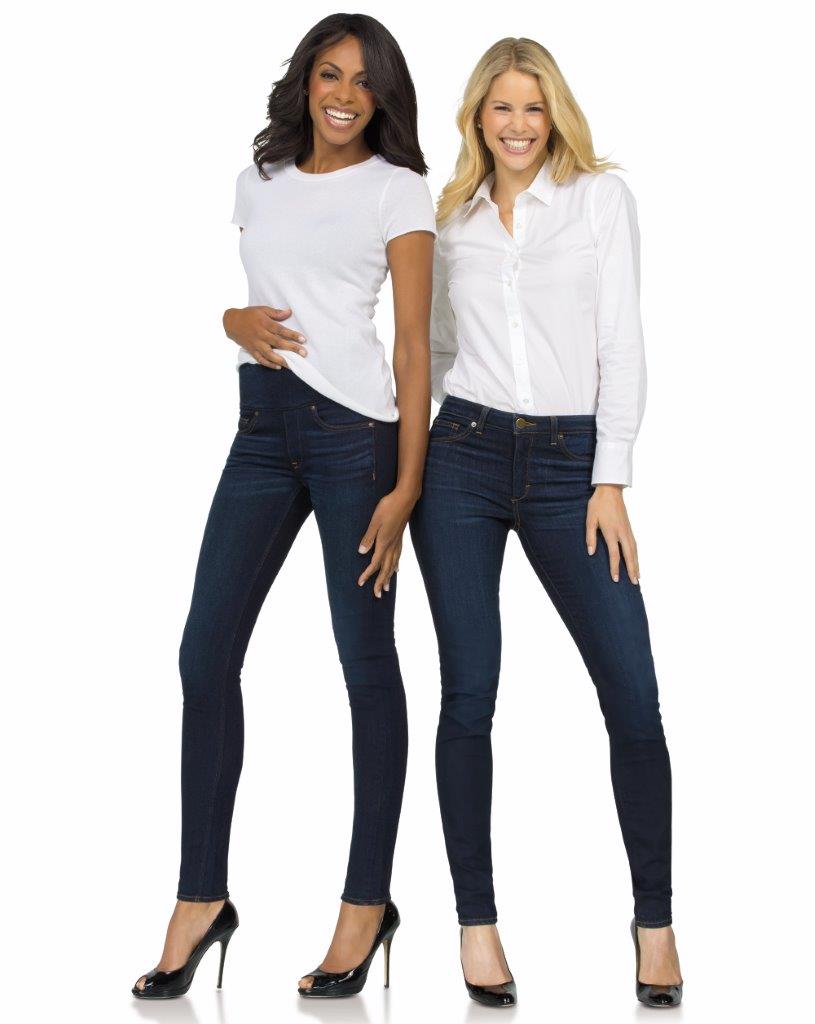
The Spanx empire of stomach-flattening, thigh-slimming, jiggle-reducing foundation garments has expanded to include what the brand promises is the mother of all body-shaping miracles: Spanx jeans. Debuting on the company’s Web site last week and available in department stores Aug. 25, the jeans come in two styles, multiple cuts and three washes and are priced at $148. They promise “thigh-trimming construction” and stretch technology meant to smooth the tummy.
Spanx, of course, is the go-to brand of modern foundation garments for women who want a little extra help under a slinky evening gown, a form-fitting pencil skirt or a pair of skinny cigarette pants. Some 50 years ago women shed the suffocating girdles and confining brassieres that molded their unruly bodies into the perfect Jayne Mansfield pin-up shape. Their rebellious sisters declared the trussed female form a feminist outrage. Now, Spanx is a multimillion-dollar brand. And in 2012, Forbes magazine crowned its founder, Sara Blakely, the youngest self-made female billionaire at age 41.
The story of Spanx’s creation reads more like a fairytale than a Harvard Business School case study. Blakely began developing Spanx in the late ’90s. Living in Florida and working in sales, Blakely hated wearing pantyhose in the steamy heat but liked the way they made her body look in her clothes. She snipped off the legs off her hosiery but kept the figure slimming panty. Voila! The girdle was reinvented as a billion-dollar idea: a lighter, less encumbering compression garment. Women, it seemed, hated muffin tops more than they disliked wearing a sausage casing.
Over time, Spanx branched out from its original business model into a broader assortment of lingerie, men’s undergarments and, last year, leggings. The brand has a high profile and devoted customer-base that has not been shy about singing the praises of their Spanx in public. It may well be the only undergarment that has received joyful shout-outs from the red carpet and backstage at award shows. “I’m triple Spanx-ed tonight!” yelped Octavia Spencer at the 2012 Golden Globes.
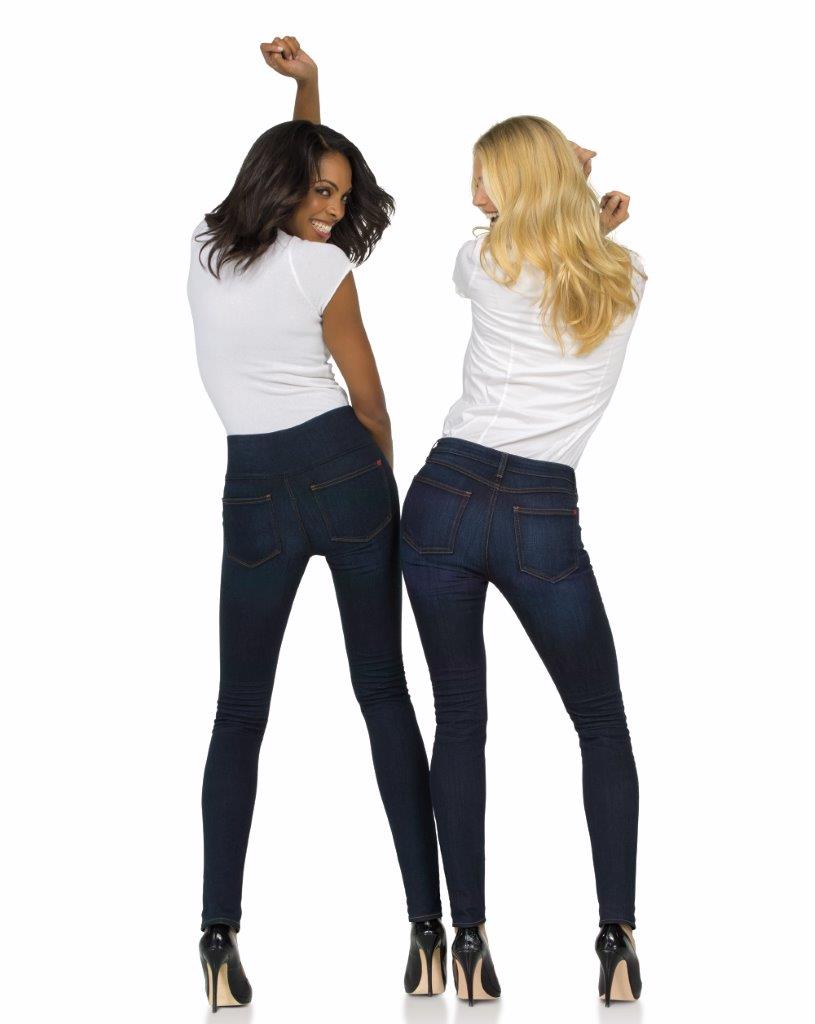
But even with all that affection, one had to wonder if women would be willing to wear dungarees with the Spanx name emblazoned on the waist band. After all, it’s one thing to make a a charming, self-deprecating joke using Spanx as the punchline. It’s another to put the name on a billboard as prominent and personal as one’s derriere — a place typically reserved for expressions of prestige, cool or exclusivity — not saddlebag-reducing pragmatism. But that concern has been rendered, if not moot, at least not so fraught, thanks to the company’s aesthetic decision to have, as the brand’s only identifying marker, a bright red Spanx rivet on the back pocket.
The Spanx jeans — specifically the Slim-X, straight leg style in an indigo wash — have a soft hand, without any of the dry crispness typically associated with denim. “We used the most premium fabrics combined with special wash treatments to create the softest jeans ever,” explained Blakely in an e-mail. Spanx jeans feel vaguely like flannel.
The whiskering is modest; the degree of stretch is generous. The slimming effects are negligible. And the fit is confusing. If the Spanx brand uses compression to smooth and shrink, doesn’t that mean that Spanx jeans must fit snugly in order to accomplish those same wonders? And if the jeans fit that close to the body are they still jeans? Haven’t they shrunk down into jeggings, which Spanx already has in its line?
Courtesy of Spanx
And if they are not form-fitting and transformative, then aren’t they just jeans – – with none of the fabled hocus-pocus of Spanx? And if they are just jeans, then what distinguishes them in a market already flooded with styles that promise all manner of figure-changing miracles: thigh-slimming, tush lifting, stomach camouflaging, leg lengthening and on and on.
Trapped in a web of fashion “what-ifs” and with the premise of perfect, mesmerizing, glorious fit the whole raison d’etre of Spanx jeans, I sought clarification from the Spanx communications team. The e-mailed response was as follows: “What makes Spanx denim stand out is our Triple Thread Technology and patent-pending hidden shaping features that create a perky rear and all-around slimming fit without compromising on-trend style for comfort.” Say what?
Still confused, I turned the jeans inside out for a close examination. The Spanx jeans are constructed so that not only the waistband stretches, but so do the stitches that attach it to the body of the pants. The front panel has a black stretchy lining that is incorporated into the interior of the front pockets. So does this mean the waist should fit close and corset-tight? Explanation, please.
A member of the merchandising team is next up at bat to break down the fit. But she is pulled from the line-up before she has a chance to speak. Can anyone in Spanx-land enlighten me on this jeans/jeggings/denim-girdle-like-device?
Blakely, herself, will elucidate.
“The magic of Spanx does not come in the tightness of the jean,” Blakely says in an e-mail, “but in the Spanx magic tummy panel hidden inside the Slim-X jean and in a uniquely designed wide, shaping waistband on The Signature style. So, all the results are achieved through hidden panels and Triple Thread Technology.”
The whiskering — that faux faded wrinkling — is meant to add to the illusion of slimness, Blakely says, as does the dark wash. And like most denim designers, the folks at Spanx agonized over the back pocket placement for an optimally flattering rear view.
As a practical matter, the Slim-X jeans have a close fit through the thighs, which several testers found self-consciously snug. The medium rise is cut to provide enough derriere coverage to avoid inadvertent mooning. But the waist lacks enough contouring to prevent a significant gap in the back. The Signature style has a wide, high, waist panel that zips at the side and calls to mind maternity pants.
Spanx jeans did not make anyone shout, “Hallelujah!” They are merely another option in a sea of options. Women reportedly try on an average of 15 pairs of jeans before either finding a pair that fits or simply giving up. For someone out there, maybe Spanx jeans — inscrutable, problematic — will be lucky number 16.